[Get the best value lens filter on Amazon today!]
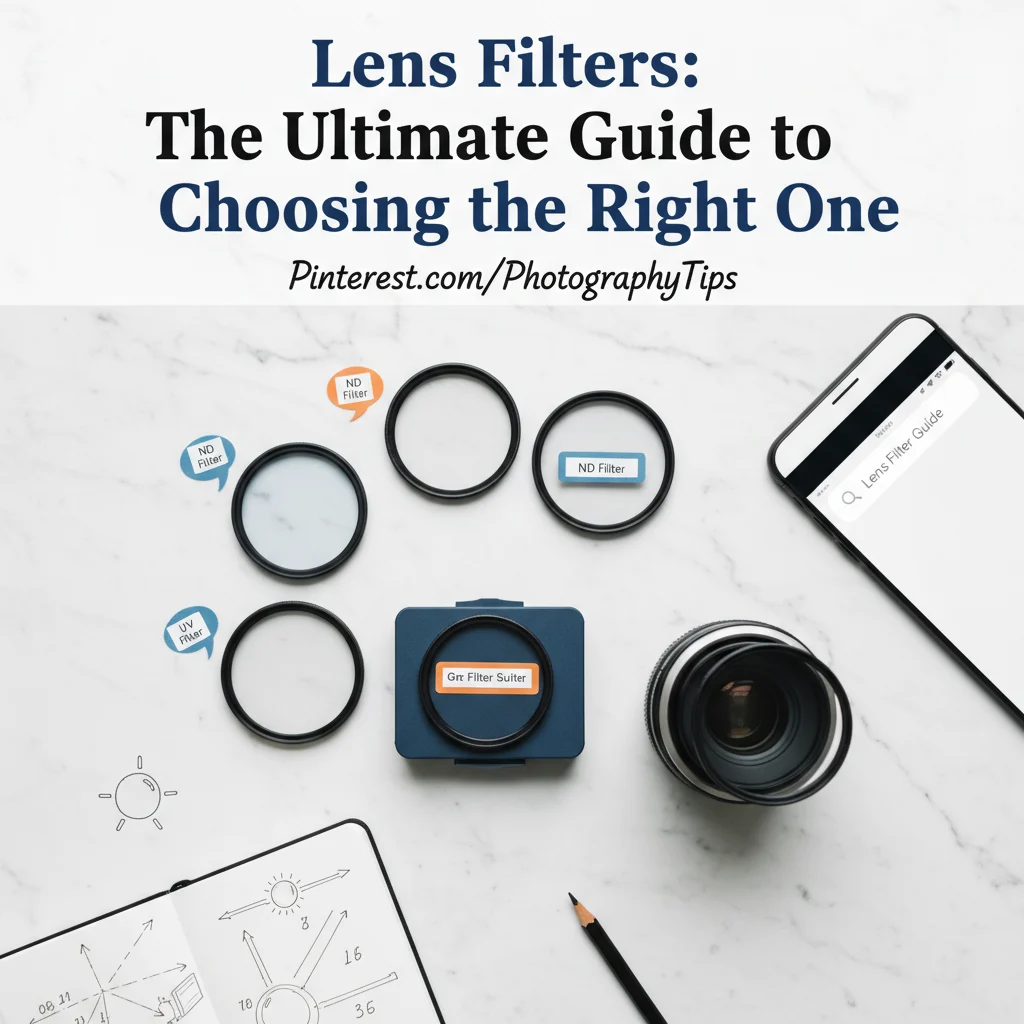
# Lens Filters: The Ultimate Guide to Choosing the Right One
Choosing the right lens filter can feel overwhelming. There are so many options, each promising to enhance your photography in some way. But don’t worry, you’re not alone! This ultimate guide will demystify lens filters, helping you understand what they do, why you need them, and how to choose the perfect one for your needs. We’ll cover everything from the essential UV filter to the more specialized polarizing and neutral density filters, so you can take your photography to the next level.
[Browse top-rated lens filter on Amazon]
## Why Use a Lens Filter?
Lens filters are more than just fancy accessories; they’re valuable tools that can protect your lens, improve image quality, and unlock creative possibilities. Here’s a breakdown of the key benefits:
* **Lens Protection:** This is perhaps the most common reason to use a lens filter. A clear or UV filter acts as a shield, protecting your valuable lens from scratches, dust, fingerprints, and even accidental impacts. Think of it as insurance for your glass!
* **Improved Image Quality:** Certain filters can enhance your photos by reducing glare, increasing contrast, and saturating colors. A polarizing filter, for instance, can cut through reflections on water or glass, revealing the details beneath.
* **Creative Effects:** Filters like neutral density (ND) filters allow you to use slower shutter speeds in bright conditions, creating motion blur effects like silky smooth waterfalls or dreamy blurred clouds. Graduated ND filters can balance the exposure between a bright sky and a darker foreground.
* **Color Correction:** While less common in the digital age (thanks to post-processing software), some filters can correct color casts caused by artificial lighting or atmospheric conditions.
[Browse top-rated lens filter on Amazon]
## Types of Lens Filters: A Comprehensive Overview
Let’s dive into the different types of lens filters and their specific uses:
### UV Filters
* **What they do:** UV filters block ultraviolet (UV) light, which can cause a bluish cast in photos, especially at high altitudes or near water. While modern lenses are often coated to block UV light, a UV filter still provides an extra layer of protection.
* **Why you need one:** Primarily for lens protection. The image quality benefits are minimal with modern lenses, but the protection aspect is invaluable. A high-quality UV filter won’t degrade your image quality.
* **Things to consider:** Choose a reputable brand to ensure the filter doesn’t introduce any unwanted color casts or distortions.
### Polarizing Filters
* **What they do:** Polarizing filters reduce glare and reflections from non-metallic surfaces like water, glass, and foliage. They also increase color saturation and contrast, making skies bluer and foliage greener.
* **Why you need one:** Essential for landscape and outdoor photography. They can dramatically improve the clarity and vibrancy of your images.
* **Things to consider:** Polarizing filters reduce the amount of light entering the lens, so you may need to adjust your exposure settings. There are two types: linear and circular. Circular polarizers are required for most modern autofocus cameras.
* **Example Usage:** Imagine photographing a lake. Without a polarizing filter, you’ll likely see a lot of glare on the water’s surface, obscuring the details below. A polarizing filter will cut through the glare, revealing the rocks and plants beneath the surface, and making the water appear deeper and more vibrant.
### Neutral Density (ND) Filters
* **What they do:** ND filters reduce the amount of light entering the lens, allowing you to use slower shutter speeds or wider apertures in bright conditions.
* **Why you need one:** For creating motion blur effects, such as silky smooth waterfalls or blurred clouds. They also allow you to use wide apertures in bright sunlight to achieve shallow depth of field.
* **Things to consider:** ND filters are available in different strengths, measured in “stops.” The higher the stop number, the more light the filter blocks. Variable ND filters allow you to adjust the amount of light reduction.
* **Example Usage:** Imagine photographing a waterfall on a sunny day. Without an ND filter, you’d have to use a fast shutter speed to avoid overexposure, which would freeze the water’s motion. An ND filter would allow you to use a slower shutter speed, creating a beautiful, silky smooth effect.
### Graduated Neutral Density (GND) Filters
* **What they do:** GND filters are half clear and half ND, with a gradual transition between the two. They are used to balance the exposure between a bright sky and a darker foreground.
* **Why you need one:** Essential for landscape photography, especially when shooting scenes with a wide dynamic range.
* **Things to consider:** GND filters are available in different strengths and transition types (hard, soft, reverse). Hard-edged GND filters are best for scenes with a distinct horizon line, while soft-edged GND filters are better for scenes with uneven horizons.
* **Example Usage:** Imagine photographing a sunset over a mountain range. The sky is incredibly bright, while the mountains are relatively dark. A GND filter will darken the sky, allowing you to properly expose the mountains without overexposing the sky.
### Color Filters
* **What they do:** Color filters selectively block certain wavelengths of light, altering the color balance of your images.
* **Why you need one:** Less common in the digital age, as color correction can be easily done in post-processing. However, they can still be useful for creating specific artistic effects or for black and white photography.
* **Things to consider:** Color filters can significantly affect the overall look of your images, so experiment to see what works best for your style.
### Special Effect Filters
* **What they do:** These filters create various special effects, such as starbursts, soft focus, or diffusion.
* **Why you need one:** For adding creative flair to your images.
* **Things to consider:** Special effect filters can be fun to experiment with, but use them sparingly to avoid overdoing it.
[Browse top-rated lens filter on Amazon]
## Choosing the Right Lens Filter: Key Considerations
Now that you know about the different types of lens filters, let’s talk about how to choose the right one for your needs:
### Filter Size
* **The most important factor:** Make sure the filter size matches the diameter of your lens. You can find the lens diameter printed on the lens barrel, usually near the front element, indicated by a “ø” symbol followed by a number (e.g., ø77mm).
* **Using Step-Up Rings:** If you have lenses with different filter sizes, you can use step-up rings to adapt smaller filters to larger lenses. However, avoid using step-down rings, as they can cause vignetting (darkening of the corners of the image).
### Filter Quality
* **Invest in quality:** High-quality filters are made from high-grade optical glass and have multi-layer coatings to reduce reflections and flare. Cheap filters can degrade image quality, introducing color casts, distortions, and reduced sharpness.
* **Reputable Brands:** Some reputable lens filter brands include B+W, Hoya, Tiffen, and Breakthrough Photography.
### Filter Material
* **Glass vs. Resin:** Lens filters are typically made from either glass or resin. Glass filters are generally more durable and scratch-resistant, while resin filters are lighter and less expensive.
* **Optical Clarity:** Ensure the filter has good optical clarity to avoid any degradation of image quality.
### Filter Coatings
* **Multi-Coating:** Look for filters with multi-layer coatings to reduce reflections, flare, and ghosting. These coatings also help to repel water and dust, making the filter easier to clean.
* **Water-Repellent Coatings:** These coatings help to prevent water droplets from sticking to the filter, which can be especially useful when shooting in wet conditions.
[Browse top-rated lens filter on Amazon]
## Recommended Lens Filter Products
Here are a few recommended lens filter products to get you started:
* **B+W 77mm UV Haze with Multi Resistant Coating (MRC):** A high-quality UV filter that provides excellent lens protection and minimal impact on image quality. Its MRC coating makes it easy to clean and resistant to scratches. You can find it on Amazon for around $50.
* **Hoya 77mm Circular Polarizer:** A reliable circular polarizing filter that effectively reduces glare and increases color saturation. Its smooth rotation allows for precise adjustment of the polarizing effect. Available on Amazon for approximately $60.
* **NEEWER 77mm ND Filter Set(ND2, ND4, ND8):** A budget-friendly ND filter set that includes three different strengths, allowing you to experiment with different shutter speeds and aperture settings. A great starter kit for learning about ND filters, available on Amazon for around $25. **Key Features:** Affordable, includes multiple ND strengths, comes with a carrying case. **Why We Like It:** A great value for beginners who want to experiment with ND filters without breaking the bank.
* **Breakthrough Photography 77mm X4 ND Filter:** A premium ND filter known for its exceptional optical clarity and color neutrality. It’s a great choice for photographers who demand the highest image quality. You can find it on Amazon for around $150. **Key Features:** Exceptional optical clarity, color neutrality, durable construction. **Why We Like It:** Delivers outstanding image quality and is built to last.
[Browse top-rated lens filter on Amazon]
## Pro Tips for Using Lens Filters
* **Clean Your Filters Regularly:** Use a microfiber cloth and lens cleaning solution to keep your filters clean and free of dust and fingerprints.
* **Stacking Filters:** Avoid stacking too many filters, as this can degrade image quality
[Check the latest prices and deals for lens filter on Amazon today!]




![Timer Wall Switch: The Ultimate Buying Guide [2026]](https://www.bestlightweightcameras.com/wp-content/uploads/2026/03/timer-wall-switch-the-ultimate-buying-guide-2026-150x150.webp)