[Get the best value outlet to switch on Amazon today!]
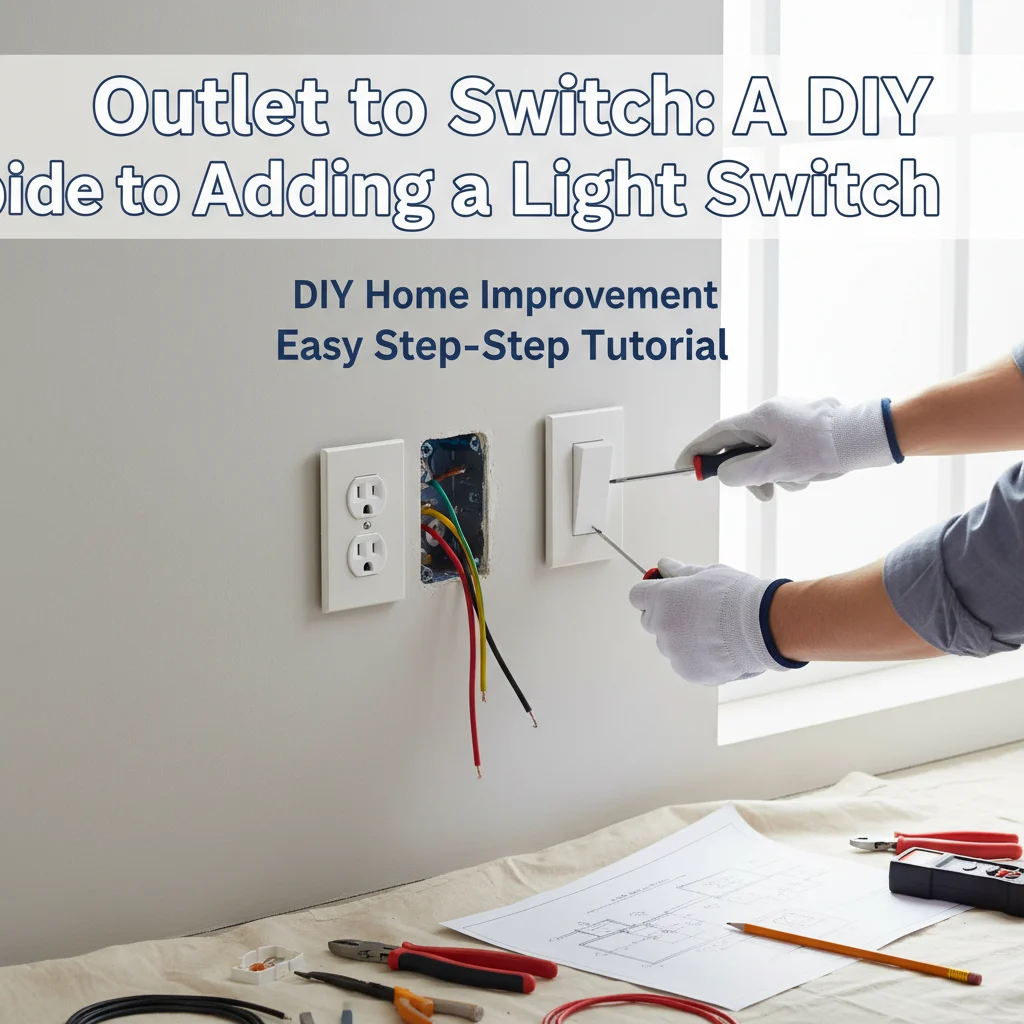
# Outlet to Switch: A DIY Guide to Adding a Light Switch
So, you’re tired of fumbling around in the dark, reaching for that lamp switch across the room? You’re thinking about adding a light switch to your circuit, but the thought of electrical work seems daunting? Relax! You’re in the right place. This guide will walk you through the process of adding a light switch using an existing outlet. Yes, you read that right – we’re going from outlet to switch!
This DIY project is simpler than you might think, and with the right tools and a little patience, you can add a convenient light switch without calling an electrician. This guide will break down the steps, providing clear instructions and helpful tips along the way. Let’s get started and brighten up your space!
### Step 1: Safety First! – Disconnect the Power
This is the most crucial step. Seriously. Before you even *think* about touching any wires, you *must* disconnect the power to the outlet you’ll be working on. Go to your breaker box (also called a service panel) and flip the breaker switch that controls that outlet to the “OFF” position.
**Double-Check:** Use a non-contact voltage tester to confirm that the outlet is indeed dead. Just hold the tester near the outlet slots, and if it lights up or beeps, the power is still on! Find the right breaker and turn it off. Your safety is paramount.
### Step 2: Gather Your Tools and Materials
Having the right tools makes the job much smoother and safer. Here’s what you’ll need:
* **Non-contact voltage tester:** As mentioned above, this is essential for confirming the power is off.
* **Screwdrivers:** A flathead and a Phillips head screwdriver are necessary.
* **Wire strippers/cutter:** For stripping the insulation off the wires and cutting them to length.
* **Pliers:** Useful for bending and manipulating wires.
* **Electrical tape:** For insulating connections.
* **Wire connectors (wire nuts):** To safely connect wires together.
* **New light switch:** Choose a switch that matches your existing decor. A single-pole switch is typically used for this project.
* **New electrical box:** A box designed to house the light switch.
* **Wall plate:** To cover the switch and give it a finished look.
* **Wire (14/2 or 12/2 NM-B wire):** The gauge (14 or 12) depends on the circuit’s amperage. 14/2 is common for 15-amp circuits, and 12/2 for 20-amp circuits. *Verify what your circuit uses before purchasing.*
* **Drill (optional):** May be needed to create space for the new electrical box.
* **Fish tape (optional):** Can be helpful for running wire through walls.
### Step 3: Prepare the Outlet
Remove the outlet cover plate and unscrew the outlet from the electrical box. Gently pull the outlet out, being careful not to yank on the wires. Use your non-contact voltage tester *again* to double-check that the power is off.
Now, disconnect the wires from the outlet. There will be three wires:
* **Black wire (hot):** This carries the power.
* **White wire (neutral):** This completes the circuit.
* **Bare copper or green wire (ground):** This provides a path for electricity in case of a fault.
Loosen the screws holding the wires in place and carefully remove them.
### Step 4: Run the Wire to the New Switch Location
This step involves running the new wire from the existing outlet box to the location where you want to install the light switch. This is often the trickiest part, as it may involve fishing the wire through walls.
1. **Plan your route:** Decide where you want the switch to be located and how you’ll run the wire. Consider the easiest path, avoiding obstructions like pipes or studs.
2. **Create an opening for the switch box:** Use a drywall saw or a drill with a hole saw attachment to cut an opening in the wall for the new electrical box. Make sure the opening is the correct size for the box.
3. **Run the wire:** Carefully feed the new wire from the outlet box to the switch location. If you’re running the wire through walls, you may need to use fish tape to help guide it. Secure the wire to studs using cable staples, ensuring you don’t pinch the wire.
### Step 5: Install the New Switch Box
Insert the new electrical box into the opening you created in the wall. Secure it in place using screws or nails, depending on the type of box.
### Step 6: Wire the Switch
Now, it’s time to connect the wires to the new light switch and the existing outlet.
**At the Outlet Box:**
1. **Connect the ground wire:** Connect the bare copper or green wire from the new wire to the existing ground wire in the outlet box using a wire connector. Also, connect this ground wire to the ground screw on the existing outlet.
2. **Connect the neutral wire:** Connect the white wire from the new wire to the existing white wire in the outlet box using a wire connector. Also, connect this white wire to the neutral (silver) screw on the existing outlet.
3. **Splitting the hot wire:** This is where the magic happens. You’ll need to “interrupt” the hot wire to run it to the switch.
* Cut the existing black wire going into the outlet box.
* Connect one end of the cut black wire to one of the black wires from the new wire using a wire connector.
* Connect the other end of the cut black wire to the remaining black wire from the new wire using a wire connector.
**At the Switch Box:**
1. Connect the two black wires to the two screw terminals on the light switch. It doesn’t matter which wire goes to which terminal on a standard single-pole switch.
2. Connect the ground wire to the ground screw on the switch.
### Step 7: Mount the Switch and Outlet
Carefully tuck the wires into the electrical boxes. Mount the light switch into the switch box and secure it with screws. Mount the outlet back into the outlet box and secure it with screws.
### Step 8: Install the Cover Plates
Install the cover plate on the light switch and the outlet.
### Step 9: Restore Power and Test
Go back to your breaker box and flip the breaker switch back to the “ON” position. Test the light switch to make sure it works. If it doesn’t, double-check your wiring.
[Browse top-rated outlet to switch on Amazon]
## Tools for the Job
Making this “outlet to switch” conversion easier requires the right tools. Here are a couple of products that can really help:
* **Klein Tools Wire Stripper/Cutter:** This is a must-have for any electrical project. The Klein Tools wire stripper/cutter provides clean and precise cuts and strips, making wire connections much easier. The different gauge options ensure you’re always working with the right setting. This tool ensures you don’t accidentally damage the wires, which can lead to shorts or other electrical problems. **Key features:** Multiple wire gauges, comfortable grip, and durable construction.
* **Wago 221-413 Wire Connectors:** Forget the old-school twist-on wire nuts! Wago connectors make creating secure and reliable wire connections a breeze. They’re reusable, easy to use, and provide a much more consistent connection than traditional methods. **Key features:** Lever-operated, reusable, and clear housing for visual inspection.
[Browse top-rated outlet to switch on Amazon]
## Pro-Tips / FAQ Section
* **What if the wires are too short?** If the existing wires are too short to reach the new connections, you can use wire extensions and wire connectors to lengthen them.
* **What if I’m not comfortable working with electricity?** If you’re not comfortable working with electricity, it’s best to hire a qualified electrician.
* **Can I add more than one switch to an outlet?** Yes, you can add more than one switch to an outlet, but it will require more complex wiring.
* **What size wire should I use?** Use the same gauge wire as the existing wiring in the circuit. Typically, 14/2 wire is used for 15-amp circuits, and 12/2 wire is used for 20-amp circuits. *Always verify your circuit amperage.*
* **My switch doesn’t work! What do I do?** Turn off the breaker immediately. Double-check all your wire connections. Make sure the switch is wired correctly. If you’re still having problems, consult a qualified electrician.
* **What is the difference between a single-pole and a three-way switch?** A single-pole switch controls a light from one location, while a three-way switch controls a light from two locations. For this project, you’ll typically use a single-pole switch.
[Browse top-rated outlet to switch on Amazon]
## Encouraging Conclusion
Congratulations! You’ve successfully added a light switch using an existing outlet. You’ve transformed a simple outlet into a more convenient and functional lighting solution. Remember to always prioritize safety when working with electricity. By following these steps and taking your time, you can confidently tackle this DIY project and enjoy the convenience of your new light switch. Now, go ahead and bask in the glow of your accomplishment!
[Check the latest prices and deals for outlet to switch on Amazon today!]