[Get the best value smart switch for three way on Amazon today!]
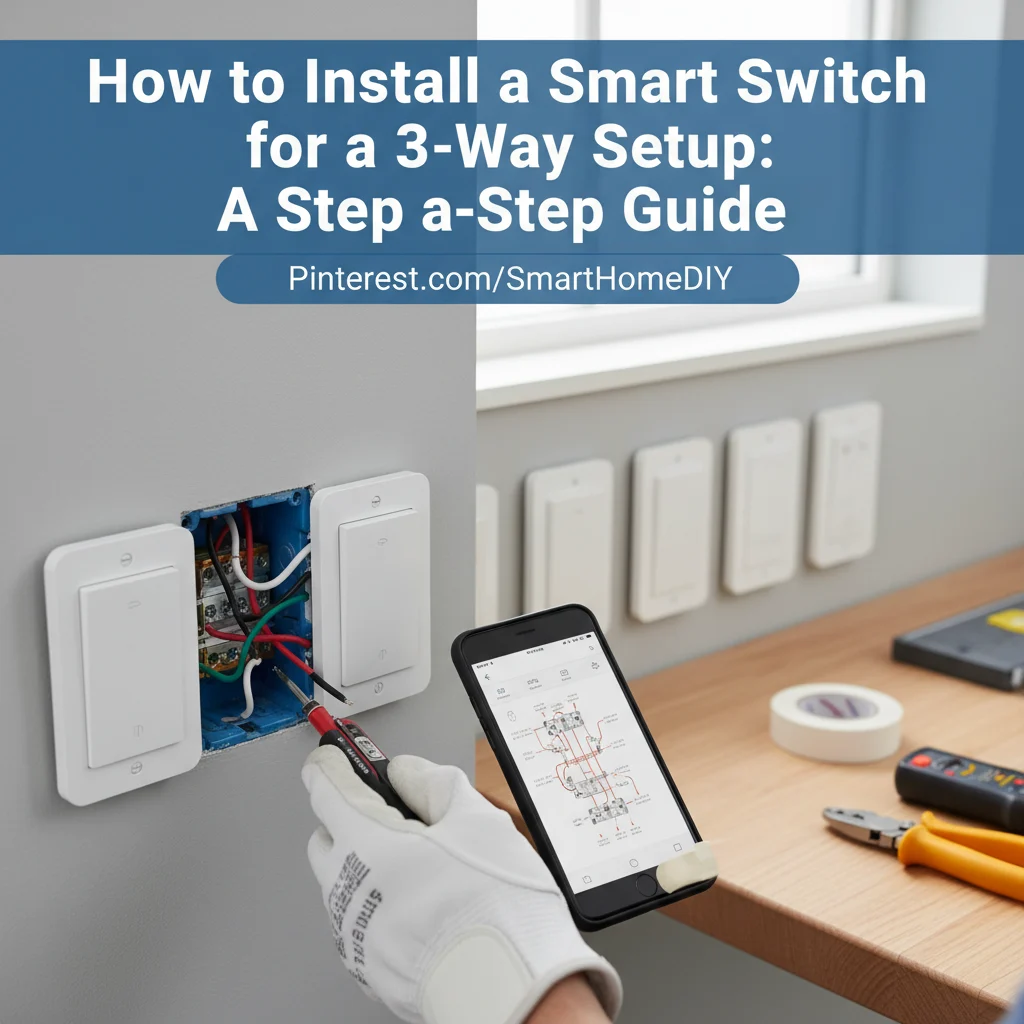
# How to Install a Smart Switch for a 3-Way Setup: A Step-by-Step Guide
Tired of fumbling for the light switch in the dark, especially when you have a 3-way setup? You’re not alone! Upgrading to a smart switch for your 3-way lighting system might seem intimidating, but with this step-by-step guide, you’ll be controlling your lights from your phone (or even your voice!) in no time. We’ll break down the process into simple, manageable steps, making it easy for even a beginner to tackle this project. So, grab your tools, and let’s get started!
### Step 1: Safety First! Turn Off the Power
This is the most crucial step. Before you even think about touching any wires, head to your electrical panel and turn off the circuit breaker that controls the lights you’ll be working on. Double-check that the power is off by flipping the existing switches. If the lights don’t turn on, you’re good to go! Safety first, always.
### Step 2: Identify the Traveler Wires
With a 3-way switch setup, you’ll typically have two switches controlling one light fixture. This means you’ll have a “common” wire (usually black) and two “traveler” wires (often red or other colors). The traveler wires are the key to making a 3-way system work.
Before disconnecting anything, carefully examine the existing switches. You’ll likely see one terminal that’s a different color (usually black) than the other two. This is the “common” terminal. The other two are for the traveler wires. Take clear pictures of both switches *before* you start disconnecting anything. This will be invaluable when you’re wiring up the smart switch.
Label the wires as you disconnect them. Use small pieces of electrical tape and a marker to label each wire: “Common,” “Traveler 1,” and “Traveler 2.” This will prevent confusion later on.
### Step 3: Remove the Old Switches
Once you’ve labeled the wires, carefully disconnect them from the old switches. Loosen the screws on the terminals and gently pull the wires free. Be careful not to damage the wires. Once all the wires are disconnected, remove the old switches from the wall box.
### Step 4: Install the Smart Switch at the “Line” Location
Determine which switch location is the “line” location. This is where the power comes *into* the switch. Usually, this is the switch that has a wire connected directly to the breaker. The other switch is the “load” location, where the wire goes to the light fixture. Consult the instructions that came with your specific smart switch. Some smart switches need to be installed in the “line” location and others in the “load” location.
Connect the wires to the smart switch according to the manufacturer’s instructions. This is where your pictures and labels will come in handy. Most smart switches will have terminals labeled for “Line,” “Load,” “Traveler 1,” “Traveler 2,” and “Neutral.”
* **Line:** Connect the wire that comes from the breaker.
* **Load:** Connect the wire that goes to the light fixture (if applicable at this location).
* **Traveler 1 & 2:** Connect the traveler wires you labeled earlier. It doesn’t typically matter which traveler wire goes to which terminal, but double-check the instructions for your specific switch.
* **Neutral:** Smart switches require a neutral wire (usually white) to operate. If you don’t have a neutral wire in the wall box, you may need to consult an electrician.
Carefully tuck the wires back into the wall box and mount the smart switch.
### Step 5: Install the Companion Switch at the “Load” Location
At the other switch location (the “load” location), you’ll typically install a “companion” switch. This is a special switch designed to work with the smart switch you installed in the “line” location. It’s often a simple button or paddle.
Connect the wires to the companion switch according to the manufacturer’s instructions. Again, your pictures and labels will be essential. The companion switch will typically have terminals for “Traveler 1,” “Traveler 2,” and “Neutral.” Some may also require a “Common” connection.
* **Traveler 1 & 2:** Connect the traveler wires you labeled earlier.
* **Neutral:** Connect the neutral wire.
* **Common (if applicable):** Connect the common wire.
Carefully tuck the wires back into the wall box and mount the companion switch.
### Step 6: Restore Power and Test
Head back to your electrical panel and turn the circuit breaker back on. Now, test your smart switch and companion switch to make sure they’re working properly. You should be able to turn the lights on and off from both locations.
### Step 7: Connect to Your Smart Home System
Follow the manufacturer’s instructions to connect your smart switch to your Wi-Fi network and your smart home system (e.g., Amazon Alexa, Google Assistant, Apple HomeKit). This will allow you to control your lights with your voice or from your smartphone.
### Tools for the Job
For a successful smart switch installation, having the right tools is essential. While many tools are available, a few stand out for their reliability and ease of use.
* **Klein Tools Electrical Test Kit:** This kit includes a voltage tester, which is crucial for ensuring the power is off before you start working. It also includes a wire stripper and a screwdriver, making it a versatile choice for electrical projects. The non-contact voltage tester provides an extra layer of safety.
* **Why We Like It:** The Klein Tools kit is known for its durability and accuracy. The voltage tester is easy to use and provides a clear indication of whether a circuit is live or not. The ergonomic design of the wire stripper and screwdriver makes them comfortable to use for extended periods.
* **Knipex Wire Stripper:** Precision is key when dealing with electrical wiring, and the Knipex Wire Stripper delivers just that. This tool provides clean and precise cuts, preventing damage to the wires.
* **Why We Like It:** The Knipex Wire Stripper is made from high-quality materials, ensuring it lasts for years. It also features an adjustable stripping diameter, allowing you to work with different wire gauges.
### Pro-Tips / FAQ Section
* **What if I don’t have a neutral wire in my wall box?**
* This is a common problem, especially in older homes. Some smart switches don’t require a neutral wire, but they may have limitations. If you’re unsure, consult an electrician.
* **Can I use any smart switch for a 3-way setup?**
* No, not all smart switches are compatible with 3-way systems. Make sure the switch you choose is specifically designed for 3-way control. Many require a companion switch.
* **What if the lights flicker after installing the smart switch?**
* This could be due to a loose connection or an incompatible bulb. Double-check all your wiring connections and try using a different type of bulb (e.g., an LED bulb designed for dimming).
* **Always double-check the wiring:** Before restoring power, carefully inspect all your wiring connections to make sure they’re secure and properly insulated.
* **Read the instructions:** Every smart switch is different, so be sure to read the manufacturer’s instructions carefully before you start.
* **Consider a professional:** If you’re not comfortable working with electrical wiring, don’t hesitate to call a qualified electrician.
### Encouraging Conclusion
Congratulations! You’ve successfully installed a smart switch for your 3-way setup. Now you can enjoy the convenience of controlling your lights from your phone, your voice, or even setting up schedules. With a little patience and attention to detail, you’ve upgraded your home and made your life a little bit easier. Enjoy your newfound smart lighting control!
[Check the latest prices and deals for smart switch for three way on Amazon today!]