[Get the best value camcorder battery on Amazon today!]
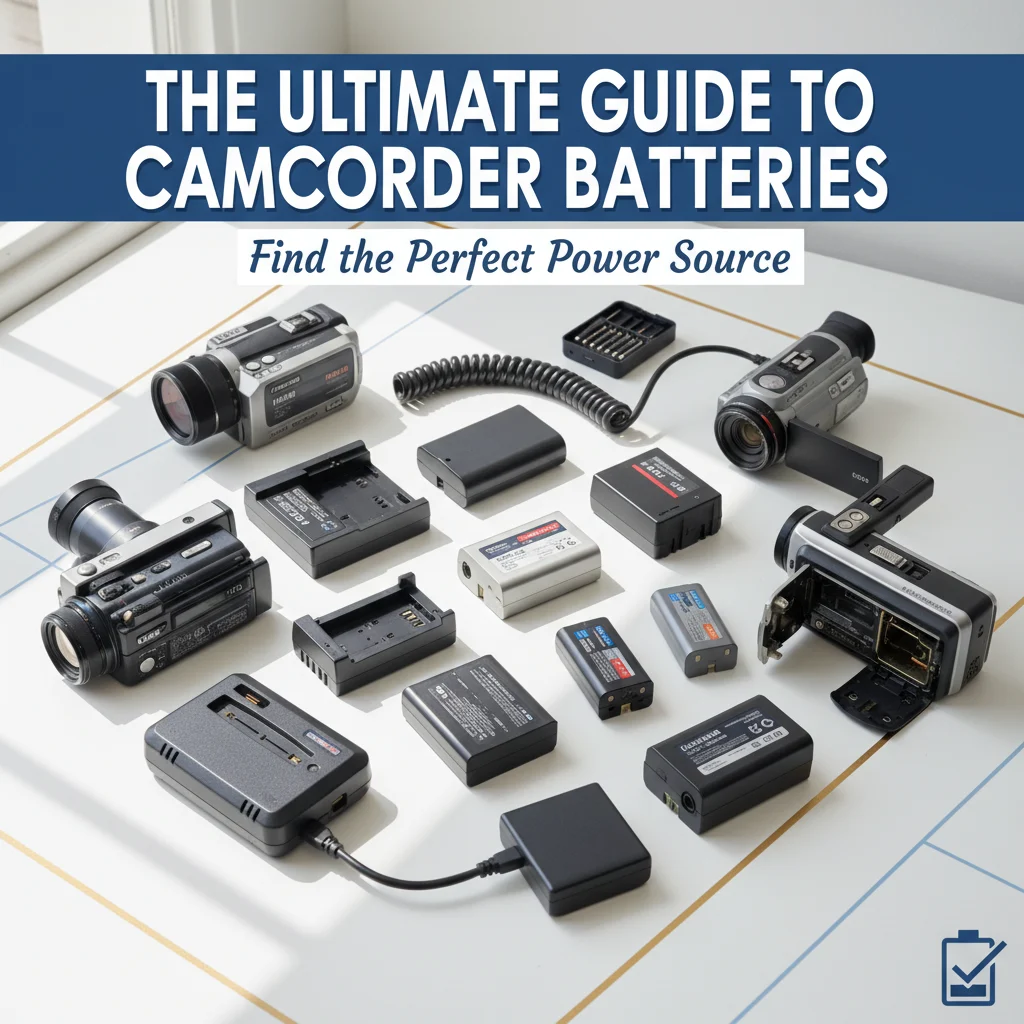
# The Ultimate Guide to Camcorder Batteries: Find the Perfect Power Source
Are you tired of your camcorder running out of juice at the most crucial moments? Capturing those unforgettable memories shouldn’t be a race against the clock. Finding the right camcorder battery is essential for uninterrupted recording, whether you’re documenting family vacations, filming your next indie masterpiece, or covering breaking news. This guide will walk you through everything you need to know to select the perfect power source for your camcorder, ensuring you never miss a shot again.
[Browse top-rated camcorder battery on Amazon]
## Understanding Your Camcorder Battery Needs
Choosing the right camcorder battery goes beyond simply grabbing the cheapest option. You need to consider several factors, including battery type, capacity, voltage, and compatibility with your specific camcorder model. Let’s break down these elements to help you make an informed decision.
**Battery Types:**
* **Lithium-Ion (Li-Ion):** These are the most common type of camcorder battery. They offer high energy density, meaning they can store a lot of power in a small package. Li-Ion batteries also have a low self-discharge rate, so they’ll hold their charge longer when not in use. Plus, they don’t suffer from the “memory effect” that plagued older battery technologies, meaning you can charge them at any time without affecting their long-term performance.
* **Nickel-Metal Hydride (NiMH):** While less common in newer camcorders, NiMH batteries are still found in some older models. They are more environmentally friendly than older Nickel-Cadmium (NiCd) batteries, but they have a lower energy density than Li-Ion batteries and a higher self-discharge rate. They also benefit from being fully discharged every once in a while.
* **Nickel-Cadmium (NiCd):** These batteries are largely obsolete due to their toxicity and the “memory effect.” Avoid these if possible.
**Capacity (mAh):**
Capacity, measured in milliampere-hours (mAh), indicates how long a battery can power your camcorder on a single charge. A higher mAh rating generally means longer recording times. However, keep in mind that actual battery life can vary depending on factors like screen brightness, zoom usage, and ambient temperature.
**Voltage (V):**
Voltage is the electrical potential difference and is crucial for compatibility. Ensure the voltage of the replacement battery matches the voltage specified for your camcorder. Using a battery with the wrong voltage can damage your device.
**Compatibility:**
This is perhaps the most important factor. Always check your camcorder’s manual or the original battery to determine the correct battery type and part number. Some manufacturers use proprietary battery designs, so you may need to purchase a battery specifically designed for your camcorder model. Third-party batteries can be a more affordable option, but make sure they are compatible and from a reputable brand.
[Browse top-rated camcorder battery on Amazon]
## Finding the Right Camcorder Battery: A Step-by-Step Guide
Now that you understand the key factors, let’s walk through the process of finding the perfect camcorder battery for your needs.
### Step 1: Identify Your Camcorder Model
The first step is to identify your camcorder model number. This information is usually found on the camcorder itself, often on a sticker on the bottom or inside the battery compartment. You can also find it in your camcorder’s manual.
### Step 2: Check the Original Battery Specifications
Once you have your camcorder model number, locate your original battery. The battery will have a label indicating its type (Li-Ion, NiMH, etc.), voltage (V), and capacity (mAh). Note these specifications. You can also often find a part number on the battery.
### Step 3: Search for Compatible Batteries
With your camcorder model number and battery specifications in hand, you can now search for compatible batteries. Start by checking the manufacturer’s website for official replacement batteries. You can also search online retailers like Amazon, B&H Photo Video, and Adorama. When searching, use your camcorder model number and battery part number to narrow down the results.
**Example Search Terms:**
* “Sony HDR-CX405 battery”
* “Canon VIXIA HF R800 battery”
* “Panasonic HC-V770 battery VW-VBT190 battery”
### Step 4: Evaluate Third-Party Options
Third-party batteries can offer significant cost savings compared to official manufacturer replacements. However, it’s important to choose a reputable brand to ensure quality and compatibility. Look for brands with positive reviews and a warranty.
**Recommended Third-Party Brands:**
* **Wasabi Power:** Known for their reliable batteries and chargers.
* **BM Premium:** Offers a wide range of camcorder batteries at competitive prices.
* **Powerextra:** Provides high-capacity batteries for extended recording times.
### Step 5: Consider Capacity and Recording Time
Think about how long you typically record for each session. If you often shoot for extended periods, consider a battery with a higher mAh rating. Keep in mind that higher capacity batteries may be slightly larger and heavier.
### Step 6: Read Reviews and Compare Prices
Before making a purchase, read reviews from other users to get an idea of the battery’s performance and reliability. Compare prices from different retailers to find the best deal.
### Step 7: Purchase and Test the Battery
Once you’ve chosen a battery, purchase it from a reputable retailer. When you receive the battery, fully charge it before using it for the first time. Test the battery by recording for an extended period to ensure it meets your needs.
[Browse top-rated camcorder battery on Amazon]
## Recommended Camcorder Batteries
Here are a few highly-rated camcorder batteries for popular camcorder brands:
* **Sony NP-FV70:** A popular choice for Sony camcorders, offering long recording times and reliable performance.
* **Canon BP-820:** A high-capacity battery for Canon VIXIA camcorders, providing extended shooting sessions.
* **Panasonic VW-VBT190:** A reliable battery for Panasonic camcorders, known for its long life and consistent performance.
[Browse top-rated camcorder battery on Amazon]
## Extending Your Camcorder Battery Life: Tips and Tricks
Once you’ve found the perfect camcorder battery, you’ll want to maximize its lifespan and recording time. Here are some tips and tricks to help you get the most out of your battery:
* **Turn off unnecessary features:** Disable features like Wi-Fi, GPS, and image stabilization when not in use. These features consume power and can drain your battery quickly.
* **Reduce screen brightness:** Lowering the screen brightness can significantly extend battery life.
* **Avoid extreme temperatures:** Extreme heat or cold can negatively impact battery performance. Avoid leaving your camcorder in direct sunlight or in a cold car.
* **Use an external power source:** If you’re shooting in a location with access to power, consider using an AC adapter or an external battery pack to power your camcorder.
* **Keep your battery clean:** Clean the battery contacts regularly with a soft, dry cloth to ensure a good connection.
* **Store your batteries properly:** When storing your batteries, keep them in a cool, dry place. Avoid storing them in direct sunlight or in high humidity.
* **Fully charge new batteries:** Before using a new battery for the first time, fully charge it. This helps to optimize its performance.
* **Don’t let your battery completely discharge:** Avoid letting your battery completely discharge, as this can shorten its lifespan.
* **Consider a spare battery:** Carry a spare battery with you so you can quickly swap it out when your main battery runs out of power. The Wasabi Power battery mentioned earlier often comes in packs of two.
[Browse top-rated camcorder battery on Amazon]
## Common Questions About Camcorder Batteries
**Q: How long does a camcorder battery last?**
A: The lifespan of a camcorder battery depends on several factors, including the battery type, capacity, camcorder model, and usage patterns. A typical Li-Ion battery with a capacity of 2000mAh can last for 1-3 hours of continuous recording.
**Q: Can I use a different brand of battery in my camcorder?**
A: Yes, you can use a third-party battery in your camcorder as long as it is compatible with your camcorder model and meets the required voltage and capacity specifications. Choose a reputable brand to ensure quality and reliability.
**Q: How do I know if my camcorder battery is bad?**
A: Signs of a bad camcorder battery include:
* Significantly reduced recording time
* Battery not charging properly
* Battery swelling or leaking
* Camcorder displaying a “battery error” message
**Q: How do I dispose of a camcorder battery properly?**
A: Camcorder batteries should be recycled properly. Do not throw them in the trash. Many retailers and recycling centers accept used batteries for recycling. Check with your local recycling center for more information.
**Q: Can I use a higher mAh battery in my camcorder?**
A: Yes, you can use a battery with a higher mAh rating in your camcorder. A higher mAh rating means the battery will last longer on a single charge. However, make sure the voltage of the battery matches the voltage specified for your camcorder.
[Browse top-rated camcorder battery on Amazon]
## Conclusion: Power Up Your Memories
Choosing the right camcorder battery is essential for capturing those precious moments without interruption. By understanding the different battery types, capacity, voltage, and compatibility factors, you can make an informed decision and find the perfect power source for your camcorder. Remember to follow the tips and tricks outlined in this guide to maximize your battery life and ensure you never
[Check the latest prices and deals for camcorder battery on Amazon today!]






![Waterproof Rocker Switch: The Ultimate Buying Guide [2026]](https://www.bestlightweightcameras.com/wp-content/uploads/2026/03/waterproof-rocker-switch-the-ultimate-buying-guide-2026-150x150.webp)